Think about the food that ends up in the bin, leftovers after a meal, forgotten items in the fridge, or half-eaten plates at restaurants. When we stop and consider how often this happens, it’s easy to see why food waste has become one of Europe’s biggest environmental challenges.
But it’s not just environmental. Food waste also raises serious ethical and economic concerns, as it happens in a world where millions of people face hunger. Key drivers of this problem include low public awareness, impulse buying, confusing food labels, and inefficiencies in food production and distribution. Despite the scale of the problem, it often remains invisible in our daily lives.
In this blog, we highlight the most important statistics on food waste across Europe and explore the main causes behind it.
Key Statistics on Food Waste in Europe
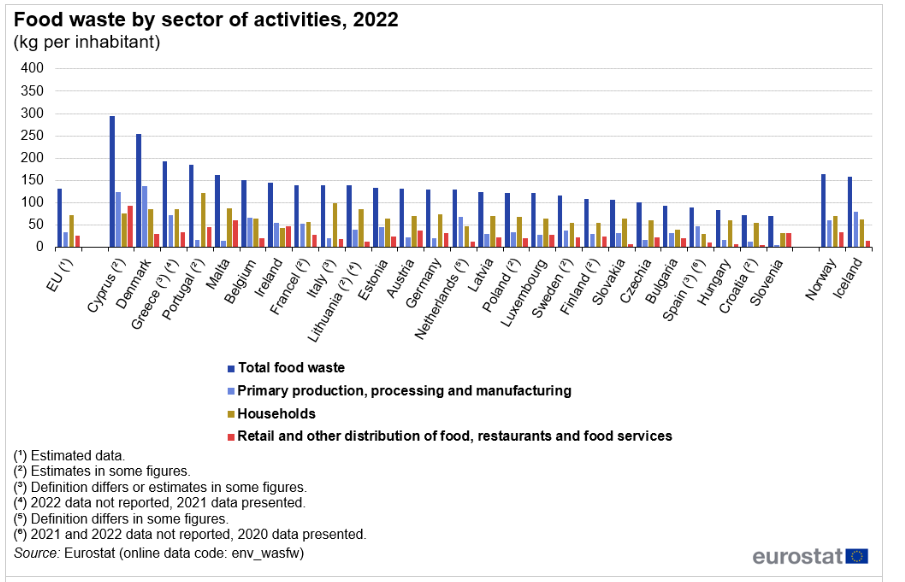
According to Eurostat data, in 2022, the average person in the European Union wasted about 132 kilograms of food. When you add that up across the whole region, it’s over 59 million tonnes of food thrown away. The countries wasting the most food per person are Cyprus, Denmark, and Greece, while Slovenia, Norway, and Iceland manage to waste the least.
What’s really hard to believe is that more than half of this waste, 54%, comes from our own homes. However, when you think about all the leftovers piling up, the forgotten veggies tucked away at the back of the fridge, and the meals we simply don’t finish, it starts to make a lot more sense.
The rest of the food waste happens across different stages of the supply chain:
Processing and manufacturing are responsible for 19% of food waste.
Farms and fisheries contribute 8% of the waste.
Restaurants and food services create 11% of food waste.
When it comes to types of food wasted, fruit (27%), vegetables (20%), and cereals (13%) make up the largest shares.Even though these food groups show where we can most effectively reduce waste, it’s important to remember that different foods have different environmental impacts. For example, while the amount of wasted meat and dairy is smaller compared to cereals and vegetables, they are responsible for over 50% of the environmental impact of food waste in the EU.
Why It Happens
Food waste is caused by a mix of factors involving both consumers and the food supply chain. Here are some of the most common causes of food waste:
Lack of Awareness: Many people don’t realise how much food they waste every day. Often, if food is left over or looks slightly old, it ends up in the trash because people aren’t sure how to use it or store it properly. Restaurants also might not know simple ways to cut down waste, like donating extra food or adjusting orders. Increasing awareness about these everyday habits is essential to reducing food waste.
Consumer Behaviours: At home, people tend to buy more food than they need, driven by promotions or poor meal planning. Misunderstanding date labels can cause perfectly good food to be thrown away prematurely. Many also lack knowledge about how to store food properly or creatively use leftovers, leading to unnecessary waste.
Production and Supply Chain Inefficiencies: On farms, overproduction or losses during harvesting can result in large amounts of food never making it to market. Strict standards mean fruits and vegetables that look “imperfect” are often rejected, even though they are perfectly edible. In transport and storage, inadequate facilities or delays cause spoilage before even products reach consumers.
Limited Resources and Time: Both consumers and businesses sometimes face practical barriers like a lack of time, money, or tools to manage food better. For instance, busy families might not have the time to plan meals or use leftovers efficiently, while small retailers may struggle to invest in better storage or waste tracking systems.
Considering that food waste accounts for about 16% of the environmental impact of Europe’s entire food system, affecting greenhouse gas emissions, water consumption, and land use, tackling these root causes should be a priority for creating a more sustainable and responsible food system.
How WiseFood Can Help
The WiseFood project, funded by the European Union, aims to tackle food waste through a comprehensive approach that democratises access to reliable data and delivers actionable recommendations to encourage positive behaviour changes. By uniting experts from research, policymaking, food production, and nutrition, WiseFood is developing digital tools that extract valuable insights, optimise recipes for both nutritional quality and environmental impact, and provide personalised meal plans and recipe suggestions. These innovations help reduce food waste while promoting healthier and more sustainable choices for individuals.
To ensure these solutions are practical and effective, WiseFood will pilot them in real-world environments through Living Labs located in Ireland, Hungary, and Slovenia, making sure they are adaptable and relevant across different contexts.
Conclusion
As the WiseFood project unfolds over the next three years, we’ll be regularly sharing updates on our progress toward reducing food waste and promoting healthier eating habits. Stay connected by following WiseFood Newsroom and its social media pages on LinkedIn, Facebook, X, Instagram, and YouTube.
One thought on “Food Waste in Europe: Key Statistics You Should Know”

One thought on “Food Waste in Europe: Key Statistics You Should Know”